
How to Choose the Best Double AA Batteries?
Choosing the right double aa batteries is easier when you look beyond price and package size. A battery may fit your device, yet perform poorly in a camera, flashlight, or wireless mouse. Chemistry matters. Alkaline cells suit many everyday devices and usually offer a reasonable balance between cost and runtime. Lithium cells are lighter and often perform better in cold conditions. Rechargeable NiMH batteries can reduce waste and long-term spending, but they need a compatible charger.
Small details matter.
This guide compares capacity, voltage stability, shelf life, leakage protection, and real-world operating performance. I have found that a battery’s printed capacity does not always predict its results. High-drain devices can expose weak performance quickly. A camera may shut down during flash use, while a wall clock continues for months. That difference deserves attention. Manufacturer specifications provide a useful starting point, but independent testing and user experience can reveal practical limitations.
Fit and storage also influence reliability. Check the device manual before choosing a replacement. Do not mix old and new cells, or different chemistries, in one device. Store unused batteries in a cool, dry place. I sometimes focus too heavily on runtime and overlook convenience, availability, or charging time. That is a mistake worth recognizing. The best choice depends on your device, usage pattern, budget, and safety expectations. With careful comparison, you can select double aa batteries that deliver dependable power without paying for features you will not use.
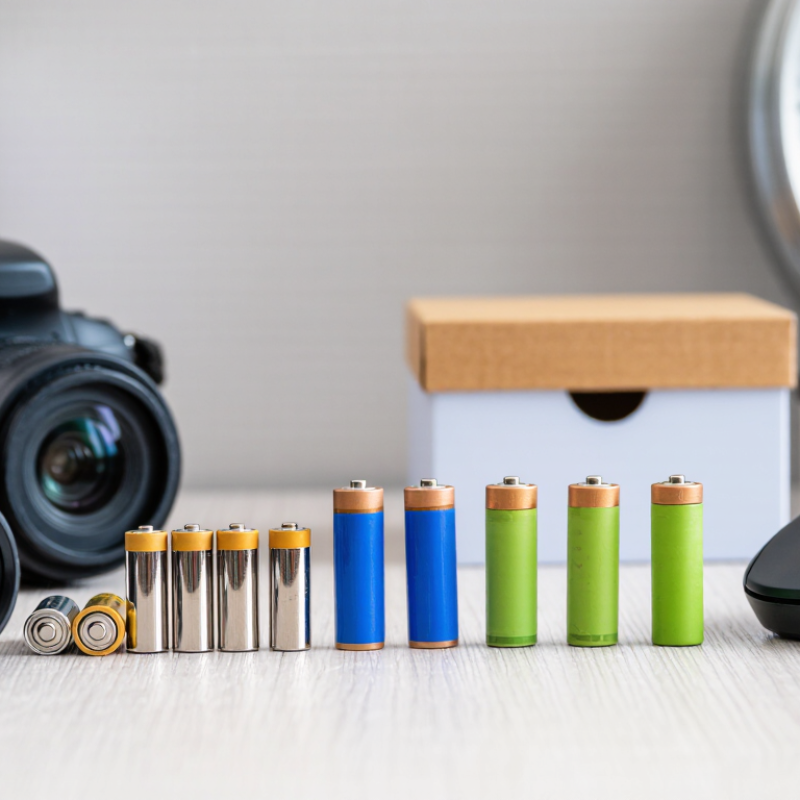
Understanding Double AA Battery Types and Chemistries
How to Choose the Best Double AA Batteries?
Double AA batteries use different chemistries, and their labels can hide major performance differences. Alkaline cells usually provide 1.5 volts and suit remotes, clocks, and wireless mice. Zinc-carbon cells cost less, but they often deliver lower capacity under heavier loads. Primary lithium AA cells also provide about 1.5 volts. They perform better in cold conditions and high-drain equipment, but they are not rechargeable.
Rechargeable nickel-metal hydride batteries usually provide 1.2 volts. That lower number worries some users, although many cameras, toys, and flashlights are designed for it. A quality NiMH cell can deliver stable current during demanding use. The International Electrotechnical Commission’s IEC 60086-1 standard defines battery performance and testing requirements, but real results still depend on device design, temperature, and storage. Check the manual.
Rechargeable cells need a compatible charger. Never judge value from purchase price alone. A 2023 U.S. Department of Energy battery technology report highlights how cycling performance and energy efficiency affect lifetime cost. Meanwhile, the U.S. Environmental Protection Agency reports that Americans purchase billions of household batteries each year, making disposal and reuse practical concerns. In my experience, alkaline cells may leak after long storage, especially inside forgotten devices. That lesson is easy to learn late. For a clock drawer, alkaline may be sensible. For a game controller used every evening, NiMH usually deserves closer attention. The “best” chemistry depends on workload, not voltage alone.
How to Choose the Best Double AA Batteries? - Understanding Double AA Battery Types and Chemistries
| Battery Type and Chemistry | Nominal Voltage | Typical Capacity Range* | Rechargeable | Typical Self-Discharge | High-Drain Performance | Temperature Characteristics | Main Advantages | Limitations | Recommended Applications |
|---|---|---|---|---|---|---|---|---|---|
| Alkaline (Zinc–Manganese Dioxide) |
1.5 V | Approximately 1,800–2,800 mAh, depending on load and cutoff voltage | No | Low; commonly around 2%–3% per year under normal storage conditions | Good for moderate loads; voltage may decline noticeably during continuous high-current use | Works well at normal room temperatures; capacity decreases in cold conditions | Widely available, low initial cost, long shelf life, and no charging equipment required | Single-use; performance is less consistent in high-drain devices; leakage can occur during prolonged storage or deep discharge | Clocks, remote controls, toys, flashlights, household devices, and occasional-use electronics |
| Nickel–Metal Hydride (NiMH) | 1.2 V | Approximately 1,900–2,500 mAh for common standard-capacity AA cells | Yes; typically hundreds of cycles when properly charged | Low-self-discharge versions may lose roughly 15%–30% during the first year, followed by a slower rate | Very good; suitable for cameras, game controllers, motorized toys, and other demanding devices | Capacity falls in cold environments, but performance is generally strong at moderate temperatures | Reusable, high current delivery, lower waste per use, and economical for frequently used devices | Lower nominal voltage than alkaline cells; requires a compatible charger; capacity and cycle life depend on charging conditions | Digital cameras, wireless accessories, flashlights, toys, portable instruments, and high-use household electronics |
| Lithium Primary (Lithium–Iron Disulfide) |
1.5 V | Approximately 2,500–3,500 mAh, depending on discharge rate and device cutoff | No | Very low; often less than 1% per year under suitable storage conditions | Excellent; maintains voltage well and performs strongly in high-drain devices | Performs well across a broad temperature range, including cold conditions | Very light, long shelf life, strong cold-weather performance, and high energy density | Higher purchase cost; must not be recharged; availability and disposal requirements may vary | Emergency equipment, outdoor devices, cameras, smoke alarms, medical accessories, and infrequently used electronics |
| Nickel–Cadmium (NiCd) | 1.2 V | Approximately 600–1,000 mAh for many AA-format cells | Yes; can tolerate high discharge rates and many cycles when maintained correctly | Moderate to high; often around 10% per month at room temperature | Excellent; delivers high current and performs reliably under demanding loads | Generally reliable in cold conditions compared with many other rechargeable chemistries | Durable, strong power delivery, and good cycle performance in suitable applications | Lower capacity, possible voltage depression with repeated shallow cycling, and cadmium-related environmental concerns | Legacy professional equipment and specialized devices designed specifically for NiCd cells |
| Zinc–Carbon (Zinc Chloride or Carbon–Zinc) |
1.5 V | Approximately 600–1,000 mAh, depending heavily on load | No | Moderate; generally shorter storage life than alkaline or lithium primary cells | Limited; voltage drops quickly under high-current demand | Performance decreases significantly in cold or high-drain conditions | Low purchase price and adequate performance for very low-drain devices | Lower capacity, shorter shelf life, weaker high-drain performance, and greater risk of leakage during extended storage | Simple clocks, basic remotes, and other low-drain devices used occasionally |
| Regulated Rechargeable Lithium-Ion AA | Approximately 1.5 V regulated output | Typically about 1,000–2,500 mWh; capacity is best compared in watt-hours because voltage is regulated | Yes; rechargeable through a compatible charging system | Low while stored, although the internal protection and regulation circuit may consume a small amount of energy | Good to very good, depending on the internal cell, regulator, and protection design | Should be used and charged within the temperature limits specified by the manufacturer | Provides a nearly constant output voltage and avoids the lower operating voltage associated with ordinary NiMH cells | Not suitable for every device or charger; built-in electronics add cost and may reduce usable capacity in some applications | Devices requiring a stable 1.5 V output, such as selected electronic accessories and portable equipment |
*Capacity values are typical estimates rather than guaranteed ratings. Actual runtime depends on discharge current, device cutoff voltage, temperature, storage age, and battery design. Always confirm the device voltage requirements and use only chargers intended for the selected rechargeable chemistry.
Related Posts
-
Top 10 Types of AA Batteries for Global Buyers?
-
How to Choose the Strongest AA Batteries in 2026?
-
China Top Double AA Batteries Suppliers for Global Buyers
-
2026 How to Choose the Best Double A Batteries for Your Needs?
-

Innovative Solutions for Long Lasting aa Batteries in Modern Electronics
-

Ultimate Guide to Double A Batteries Comparing Performance Lifespan and Efficiency