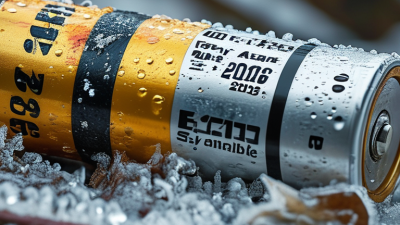
Top 10 Types of AA Batteries for Global Buyers?
Choosing the right AA batteries is rarely as simple as comparing package prices. Global buyers must examine chemistry, capacity, voltage stability, shelf life, leakage resistance, and operating temperature. A battery that performs well in a television remote may fail quickly inside a camera flash or outdoor sensor.
This guide introduces ten important AA battery types, including alkaline, lithium primary, nickel-metal hydride, and low-self-discharge rechargeable models. Each type serves a different purpose. Some prioritize affordability. Others deliver stronger performance in cold warehouses, high-drain devices, or emergency equipment. We will also consider charging cycles, storage conditions, labeling, transport requirements, and independent quality testing. Small differences matter.
Battery expert Isidor Buchmann, founder of Cadex Electronics, has stated, “The best battery is the one that fits the application.” That principle remains practical for international purchasing teams. Buyers should request technical datasheets, batch information, safety documentation, and samples before placing large orders. IEC testing references can support comparison, but they do not replace real-world trials.
There is no universal winner.
A low-cost alkaline cell may be ideal for a wall clock, while a rechargeable NiMH cell may better suit wireless accessories used daily. Lithium AA batteries can offer long storage life, yet their higher price requires careful cost analysis. Even experienced buyers can overlook humidity, warehouse heat, or device compatibility. This guide aims to reduce those mistakes through clear comparisons, practical examples, and evidence-based selection. Some recommendations may still need revision after field testing. That is an honest limitation.
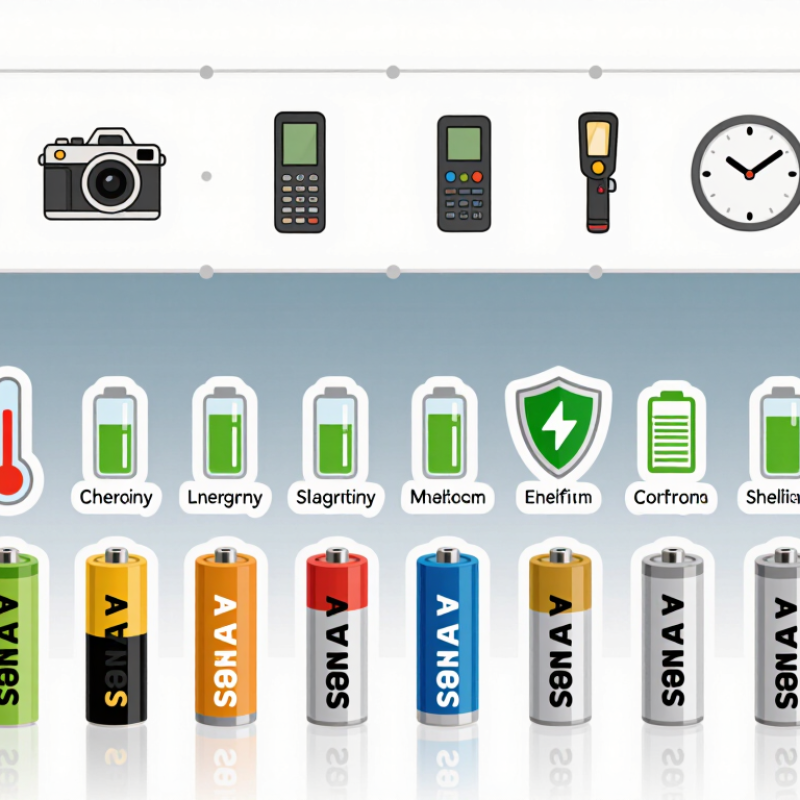
AA Battery Fundamentals and Global Classification Standards
Top 10 Types of AA Batteries for Global Buyers
AA batteries share a shape, but their chemistry changes performance. The ten common types include zinc-carbon, alkaline, lithium primary, rechargeable alkaline, nickel-metal hydride, nickel-cadmium, nickel-zinc, lithium-ion 14500, lithium-iron-phosphate 14500, and silver-oxide AA cells. IEC 60086-1 and IEC 60086-2 define primary battery terminology, dimensions, marking, and performance tests. Most primary AA cells provide 1.5 volts nominally. NiMH cells usually provide 1.2 volts. That difference affects flashlights, toys, sensors, and motorized devices.
Capacity also needs careful reading. Many NiMH AA cells range from about 1,900 to 2,800 mAh under controlled testing. Actual results depend on discharge current, temperature, storage age, and equipment design. IEC 61951-2 covers portable rechargeable NiMH batteries. ANSI C18.1.1 provides another widely used framework for primary cylindrical cells in North America. These standards support safer comparison across international supply chains.
Lithium-ion 14500 cells can look identical to AA batteries, yet their voltage may reach 3.6 or 3.7 volts. They are not automatically interchangeable. A regulated 1.5-volt lithium AA is a different product. Small details matter. Buyers should verify voltage, terminal design, charger compatibility, transport labeling, and test conditions. Industry market reports often compare capacity without matching discharge rates. That is a real weakness. A higher number may perform worse in a low-drain sensor, while a lower-capacity cell may handle cold weather better.人片在线观看
Alkaline, Zinc-Carbon, and Zinc-Chloride AA Batteries
For global buyers, AA battery selection begins with chemistry, not packaging.
Alkaline AA batteries provide reliable energy for remotes, toys, clocks, and household devices. They usually offer better capacity than zinc-carbon cells, especially under moderate or high drain.
Zinc-carbon batteries suit simple, low-drain products, such as wall clocks or basic flashlights. Their lower purchase price can support large-volume purchasing, but performance may fall sooner during continuous use.
Zinc-chloride AA batteries sit between traditional zinc-carbon and alkaline options. They often deliver steadier output than standard zinc-carbon cells while remaining economical for light-to-medium loads.
Actual results depend on device design, storage temperature, and discharge patterns. In practical testing, a battery that performs well in a clock may disappoint in a toy motor. That difference is easy to overlook. Buyers should compare capacity data and test samples before placing a large order.
Tips:
Match alkaline cells with higher-drain devices. Choose zinc-carbon for low-demand applications. Consider zinc-chloride when cost and steadier output both matter. Check declared capacity, production date, leak-resistance information, and safety documentation. Store cartons in a cool, dry place. I would not rely on price alone; small sample tests often reveal surprising differences.
Rechargeable NiMH, NiCd, and Lithium-Ion AA Batteries
Top 10 Types of AA Batteries for Global Buyers?
Rechargeable AA batteries usually fall into three key chemistry groups: NiMH, NiCd, and lithium-ion. NiMH batteries suit cameras, toys, wireless keyboards, and emergency lights. They offer practical capacity without requiring special equipment. Modern low-self-discharge NiMH cells can retain charge for months, but storage temperature still matters. In daily testing, a matched set often performs better than four mixed cells.
NiCd
NiCd batteries deliver strong current and tolerate repeated charging in demanding tools. However, their capacity can decline when users recharge them carelessly. Cadmium also creates environmental concerns, so responsible collection and recycling are essential. NiCd remains useful in some industrial applications, but it is not the easiest choice for ordinary household buyers. That deserves careful thought.
Lithium-ion
Lithium-ion AA batteries provide high energy density and stable output in selected devices. Many include internal control circuits and deliver a regulated voltage. They are not automatically safe replacements for every alkaline or NiMH battery. Check the device manual, operating voltage, charger compatibility, and protection design before purchase. A rechargeable lithium-ion AA cell may appear convenient, yet the wrong charger can damage both battery and equipment.
Global buyers should compare capacity, cycle life, charging time, temperature range, leakage resistance, and transport documentation. NiMH is often the balanced option for everyday use. NiCd may serve rugged, specialized equipment. Lithium-ion can reduce weight, but compatibility becomes more critical. I would not choose by capacity alone. Real performance depends on the device, charging habits, and storage conditions.
Primary Lithium, Lithium-Iron Disulfide, and Silver-Oxide AA Batteries
Primary lithium, lithium-iron disulfide, and silver-oxide cells deserve close attention in any “Top 10 AA Battery Types” review. According to the 2024 Primary Battery Market report by Fortune Business Insights, the global market reached approximately US$14.7 billion in 2023. Primary cells remain important where recharging is impractical. In field use, primary lithium AA batteries provide low weight, strong cold-weather performance, and long storage life. They suit emergency kits, outdoor sensors, and professional instruments.
Lithium-iron disulfide AA batteries are a more specialized option. They usually deliver a higher initial voltage than alkaline cells and perform well in cameras, flashlights, and other high-drain equipment. A 2024 market analysis by Grand View Research identifies rising demand for lightweight, high-energy primary batteries in portable electronics. However, higher purchase cost can weaken their value in low-drain devices. The cheaper option is not always the practical option.
Silver-oxide AA batteries offer stable voltage and dependable discharge characteristics. They are useful for precision instruments, medical equipment, and compact devices requiring consistent output. The IEC 60086 battery standard defines relevant dimensional, electrical, and safety requirements, helping buyers compare compliant products. Still, silver-oxide AA availability is limited, and specifications vary across suppliers. I would verify voltage curves, operating temperature, leakage resistance, and shelf-life data before ordering. Some catalog descriptions look impressive, but real performance may disappoint.
How to Compare AA Battery Types for Global Applications
Top 10 Types of AA Batteries for Global Buyers?
How to Compare AA Battery Types for Global Applications
The label “AA” describes size, not chemistry or performance. Global buyers should compare alkaline, zinc-carbon, lithium primary, nickel-metal hydride, and other rechargeable formats carefully. Nominal voltage matters. Most disposable cells provide about 1.5 volts, while nickel-metal hydride cells provide about 1.2 volts. Some devices may not operate correctly with every type.
Check capacity under the device’s real load, not only the printed milliamp-hour figure. A camera flash demands short, powerful bursts. A wall clock needs steady, low-current output. Lithium primary cells usually perform better in cold storage areas and remote sensors. Alkaline cells suit general household equipment, but heat and long storage can increase leakage concerns. Zinc-carbon cells may cost less, yet their lower capacity can raise replacement labor.
For rechargeable use, compare cycle life, charging temperature, self-discharge, and charger compatibility. A low-self-discharge nickel-metal hydride cell can suit wireless keyboards and inspection tools. However, actual results depend on charging habits and equipment design. I still request sample testing before large orders. Laboratory figures are useful, but warehouse humidity and mixed usage can change outcomes. Review safety documentation, production dates, packaging quality, and recognized testing requirements. Confirm polarity, terminal design, and transport conditions with the supplier. Small details matter.
Top 10 Types of AA Batteries for Global Buyers
How to compare AA battery types for global applications using representative energy, nominal voltage, and typical capacity.
The chart uses representative mid-range values calculated from commonly published specifications. Actual capacity depends on discharge current, temperature, equipment cut-off voltage, storage conditions, and battery construction. Lithium-ion 14500, NiZn, and lithium thionyl chloride cells may not be direct replacements for standard 1.5 V AA batteries.
Related Posts
-
How to Choose the Strongest AA Batteries in 2026?
-
Innovative Solutions for Long Lasting aa Batteries in Modern Electronics
-
Ultimate Guide to Double A Batteries Comparing Performance Lifespan and Efficiency
-
How to Choose the Right Double A Batteries for Your Everyday Needs
-
Ultimate Guide to Understanding AA Batteries Performance Ratings and Lifespan
-
The Ultimate Guide to Double AA Batteries: Powering Your Devices Efficiently