China Top Keyless Entry Door Lock Manufacturers?
The global smart lock market is expanding as homeowners, hotels, and property managers seek safer, more convenient access. Grand View Research estimates that the smart locks market could grow at a strong double-digit rate through 2030. MarketsandMarkets reports similar momentum, although its market boundaries and forecasts differ. This difference matters. It shows why buyers should compare definitions, not accept every headline figure.
China is a major manufacturing base for the Keyless Entry Door Lock industry. Its suppliers commonly provide fingerprint, keypad, RFID card, Bluetooth, Wi-Fi, and temporary passcode functions. Many factories also support OEM and ODM development. A hotel lock may require a compact black-metal body, emergency power contacts, and software that records every entry. A residential model may need quieter motors, longer battery life, and simple mobile control.
Manufacturing scale alone does not prove reliability. The strongest suppliers demonstrate tested production systems, traceable components, and clear after-sales procedures. Buyers should review factory audits, sample consistency, firmware update policies, and certifications relevant to the target market. ANSI/BHMA, EN 15684, CE, FCC, and IP ratings may apply differently by product and destination.
This guide examines leading China Keyless Entry Door Lock manufacturers through practical criteria. These include product engineering, testing capability, customization, export experience, and service responsiveness. Public rankings are imperfect. Supplier claims also need verification. That is why direct sample testing remains essential before a large order. A polished catalog cannot replace a lock tested on a real door, under repeated daily use.
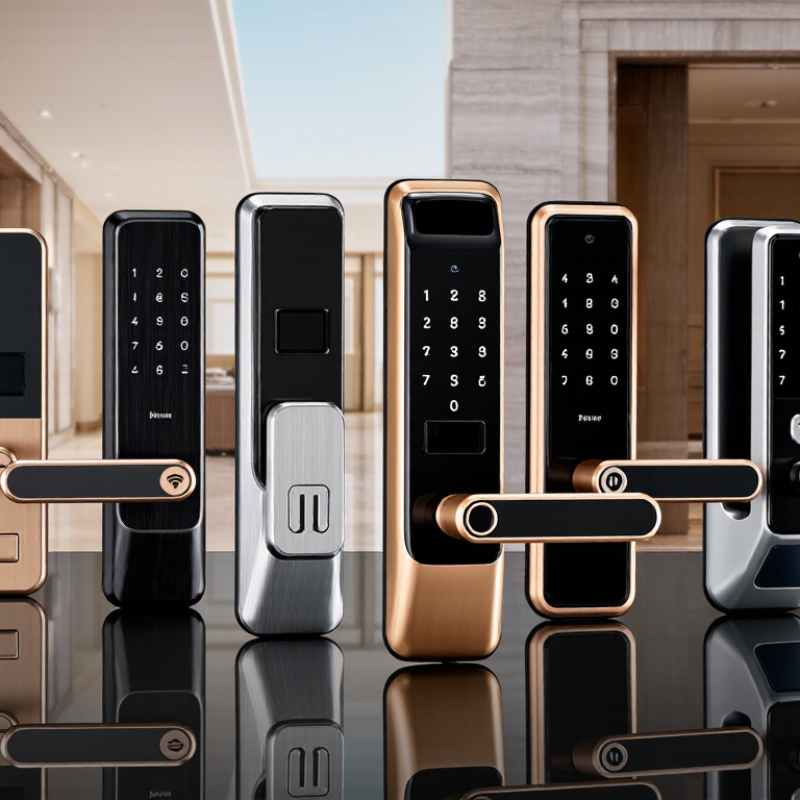
What Are Keyless Entry Door Locks?
China Top Keyless Entry Door Lock Manufacturers?
What Are Keyless Entry Door Locks?
Keyless entry door locks secure a door without requiring a traditional metal key. They may use a PIN code, fingerprint, RFID card, smartphone, or Bluetooth signal. Inside the lock, a small motor moves the deadbolt after an authorized entry attempt. Many models also include a manual thumb turn, low-battery warning, and emergency power contact.
In real use, convenience depends on installation quality. A misaligned door can make the motor strain or fail to lock completely. Test the bolt with the door open first. Then check it again after closing the door. Fingerprint readers can struggle with wet hands, while wireless models may lose connection. No system is perfect.
Tips: Choose a lock with temporary codes for visitors and activity records for monitoring. Confirm its battery life, backup power method, and compatibility with your door thickness. Keep a secure emergency option available. Review recognized safety certifications and local building requirements before purchase. A professional installer can identify weak frames, loose hinges, or incorrect bolt placement that product specifications may overlook.
Types of Keyless Entry Door Lock Manufacturers in China
China’s keyless entry door lock market includes several manufacturer types, each serving different project needs. OEM factories produce locks from buyer drawings, housing shapes, keypad layouts, and packaging. They suit distributors with established specifications. ODM manufacturers go further. They develop the product structure, firmware options, and user interface with the buyer. This can shorten development work, although revisions may cost more than expected.
Dedicated smart-lock manufacturers focus on fingerprint, PIN, RFID, Bluetooth, or temporary-code functions. Their engineering teams usually handle battery testing, motor torque, app integration, and emergency power design. Some factories specialize in hotel and apartment access systems. They often provide management software, gateway devices, and audit records. Commercial door-lock manufacturers build stronger bodies for offices, rental properties, and high-use entrances. Look for zinc alloy or stainless-steel options, cycle testing, IP ratings where relevant, and clear installation tolerances. Marketing claims need evidence.
Traditional door-hardware factories are another group. They may offer electronic handles, mortise locks, cylinders, and matching hinges from one production line. Their advantage is mechanical experience, but software support can be limited. Integrated manufacturers combine mold making, assembly, quality inspection, and export documentation under one organization. This may improve traceability. It does not guarantee better performance. Request samples, factory test records, firmware update procedures, warranty terms, and spare-part lists. I would also test a lock on a real door, not only on a showroom panel.
China Top Keyless Entry Door Lock Manufacturers? - Types of Keyless Entry Door Lock Manufacturers in China
| Manufacturer Type | Primary Unlocking Method | Common Product Features | Power and Connectivity | Typical Applications | Important Buyer Checkpoints |
|---|---|---|---|---|---|
| PIN Code Keypad Manufacturers | Numeric PIN code | Temporary codes, anti-peep input, passage mode, mechanical override | Replaceable batteries; some models support wired access-control inputs | Apartments, offices, rental properties, utility rooms | Code-management capacity, keypad weather resistance, emergency power interface, audit-log support |
| RFID and Card Lock Manufacturers | Contactless RFID card or key fob | Card enrollment, lost-card deletion, staff access levels, optional keypad | Battery-powered standalone operation or wired access-control integration | Hotels, dormitories, offices, serviced apartments | Card frequency and security protocol, encoder compatibility, offline event storage, installation format |
| Fingerprint Lock Manufacturers | Fingerprint recognition, often combined with PIN or mechanical key | User templates, administrator accounts, low-battery alerts, privacy settings | Rechargeable or replaceable battery; emergency USB or external-contact power on some models | Residential entrances, private offices, small commercial premises | Sensor performance, false-acceptance and false-rejection testing, data protection, door compatibility |
| Bluetooth Smart Lock Manufacturers | Mobile application, Bluetooth credential, PIN, or key card | Remote user invitations, time-limited permissions, access records, local unlock operation | Battery-powered Bluetooth connection; gateway required for remote internet access | Residential properties, holiday rentals, shared offices | Application ownership, API availability, offline behavior, firmware-update process, privacy policy |
| Wi-Fi and Connected Lock Manufacturers | Mobile application, PIN, fingerprint, card, or integrated access system | Remote control, notifications, user scheduling, cloud administration, event history | Wi-Fi model or separate gateway; battery operation is common for retrofit products | Property management, smart homes, short-term rental operations | Network security, encrypted communication, cloud data location, service continuity, gateway range |
| Hotel Access Lock Manufacturers | RFID card, mobile credential, PIN, or centralized hotel-management system | Room assignment, check-in integration, master-card hierarchy, energy-saving interfaces | Standalone battery lock or wired integration with hotel access systems | Hotels, hostels, resorts, serviced residences | Door thickness, mortise dimensions, management-software integration, fire-door requirements, service support |
| OEM and ODM Door Lock Manufacturers | Configured according to the buyer’s selected credential system | Custom housing, firmware, packaging, user interface, mechanical structure, and access modes | Battery, wired, Bluetooth, Wi-Fi, or access-control integration according to specification | Private-label projects, distributors, property developers, security integrators | Tooling ownership, minimum order quantity, sample approval, change control, warranty terms, spare parts |
| Commercial Access-Control Manufacturers | Card, biometric credential, PIN, mobile credential, or centralized controller | Multi-door management, role-based permissions, attendance functions, event reporting | Usually wired power and network connection; backup power may be specified | Factories, schools, hospitals, warehouses, commercial buildings | Controller capacity, communication protocols, fail-safe or fail-secure behavior, emergency egress, system scalability |
Note: Product specifications vary by model and project configuration. Buyers should verify current technical documents, applicable local regulations, testing records, and installation compatibility before placing an order.
How China’s Top Manufacturers Design and Produce Smart Locks
China’s leading keyless entry door lock manufacturers build smart locks around daily problems, not just digital features. Their engineers study door thickness, latch alignment, weather exposure, and user habits before finalizing a design. A prototype may be tested on metal and wooden doors. It must survive repeated unlocking, low batteries, dusty hinges, and wet hands.
Production usually combines CNC machining, injection molding, circuit assembly, and controlled software testing. Workers inspect fingerprint sensors under bright bench lights. They check keypad response, motor noise, screw fit, and emergency power contacts. Factory teams also test Bluetooth or Wi-Fi connections across walls. Small errors matter. A misaligned spindle can make a premium lock feel unreliable.
Experienced manufacturers create traceable inspection records for components and finished units. They verify battery safety, access control settings, and mechanical override functions against applicable market requirements. Yet automation does not remove judgment. A rushed sample can hide a weak spring or confusing installation step. Engineers often revise the housing, firmware, or user instructions after field feedback. That practical loop improves reliability, although no design is perfect. Buyers should request test reports, production samples, installation drawings, and clear warranty terms before placing a large order.
Key Factors for Evaluating Chinese Keyless Lock Manufacturers
China Top Keyless Entry Door Lock Manufacturers
Evaluating Chinese keyless lock manufacturers requires more than comparing factory prices. Fortune Business Insights estimates the global smart lock market at USD 2.99 billion in 2024. It projects USD 8.21 billion by 2032, with a 13.5% CAGR. Market estimates differ, but demand is clearly expanding. A polished showroom proves little. Ask for production records, component traceability, and recent quality reports.
Factory capability matters. Check whether the manufacturer performs cycle testing, salt-spray testing, drop testing, and battery-drain testing. Request sample results, not promises. A serious supplier should explain its testing equipment and acceptance limits. It should also maintain batch codes for motors, sensors, chips, and lithium batteries. ISO 9001 certification can support process consistency, but certification alone cannot prove lock reliability.
Security needs equal attention. NIST guidance on IoT devices emphasizes secure updates, vulnerability handling, and protection of user data. Ask for independent penetration-test reports, encrypted communication, signed firmware, and a documented update policy. Test the lock after repeated failed entries and low-battery warnings. Mechanical override design deserves scrutiny too. I would reject vague claims about “bank-level security.” They sound impressive, but they are not measurable. MarketsandMarkets has forecast strong smart-lock growth through 2028, yet rapid expansion may expose weak supplier controls. A factory audit, pilot order, and six-month field review reveal more than a catalogue.
Certifications, Quality Control, and Global Export Standards
China Top Keyless Entry Door Lock Manufacturers?
Certifications, Quality Control, and Global Export Standards
Reliable keyless entry door lock manufacturers provide more than attractive product photos. During supplier evaluations, buyers should request current certification copies, test reports, and factory audit records. Relevant documents may include ISO 9001, CE, FCC, RoHS, and regional radio compliance approvals. Requirements vary by destination market, so one certificate cannot cover every shipment.
Quality control should be visible on the production floor. Inspectors may test fingerprint recognition, keypad response, motor strength, battery contacts, and emergency power ports. A useful factory will record test results for each production batch. Sample checks should include salt-spray testing, repeated locking cycles, and drop tests for exterior components. Small details matter. Loose screws become field complaints.
Experienced manufacturers also manage export documentation carefully. Packaging should show model numbers, electrical ratings, battery warnings, and installation instructions in the required language. Carton testing helps protect locks during long sea transport. Suppliers should explain warranty handling, spare parts, software updates, and data protection practices. These areas are often overlooked.
No factory is flawless. That is worth admitting. A responsible supplier can identify failure rates, corrective actions, and unfinished improvements instead of hiding them. Buyers should compare records against physical samples and conduct independent pre-shipment inspections. A polished certificate folder is useful, but consistent evidence from materials, assembly, testing, and shipping offers stronger proof of reliability.