FAQs2024-06-21T06:05:11+00:00

How to Choose a Skin Analysis Machine for Your Business

Choosing a Skin Analysis Machine is a business decision, not a showroom decoration. The right system should support consistent consultations, clearer recommendations, and measurable client progress.

Market evidence shows why this category is expanding. Grand View Research identifies personalization, digital diagnostics, and AI-supported skincare as major growth drivers in the global skincare devices market. McKinsey’s 2023 beauty report also projected the global beauty market could approach $580 billion by 2027. These figures indicate opportunity, but they do not prove every device delivers equal value. Report definitions differ. That matters.

Dermatologist Dr. Anjali Mahto has emphasized a practical truth: “Skincare is not one-size-fits-all.” A useful machine should reflect that principle. Look for controlled lighting, repeatable imaging, transparent measurement methods, and software that explains results clearly. Check whether it can compare hydration, pigmentation, texture, pores, and redness over time. Ask about calibration, staff training, data protection, maintenance, and integration with your customer records.

Do not trust a glossy score alone.

The best Skin Analysis Machine is not necessarily the most expensive model. It is the one your team can operate consistently, explain responsibly, and maintain for years. Results should guide professional conversations, not replace qualified medical assessment. The choice may still feel imperfect. That is normal. A careful buyer compares demonstrations, verifies supplier claims, and tests real workflows before signing a contract.
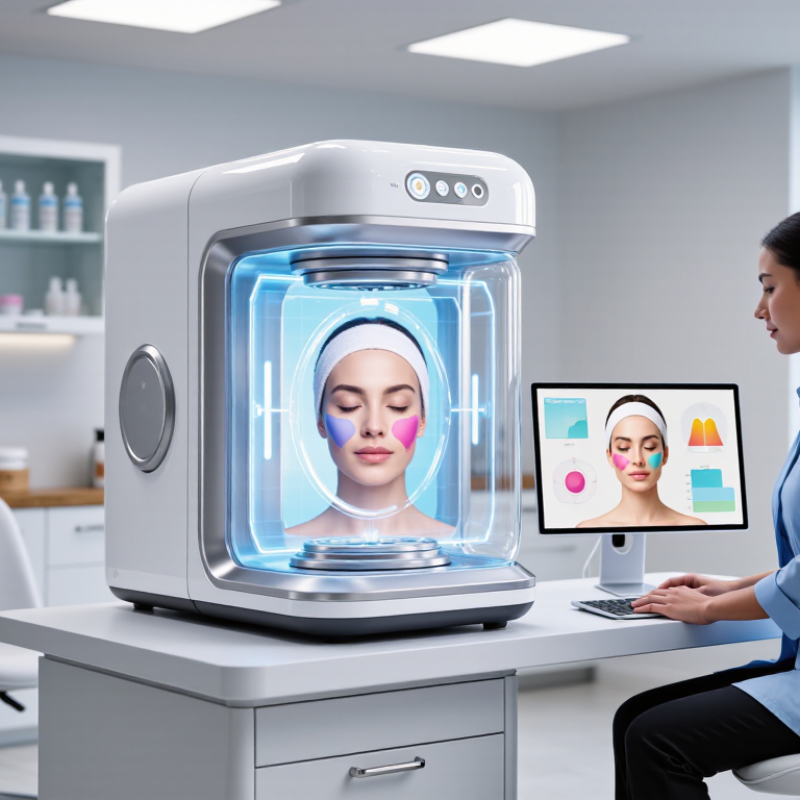
How to Choose a Skin Analysis Machine for Your Business

Define Your Business Needs and Client Assessment Goals

Define Your Business Needs and Client Assessment Goals

Choosing a skin analysis machine should begin with your service model, not its feature list. Start with the decision. Do you need faster consultations, clearer client education, progress tracking, or support for product recommendations? A busy salon may value a quick assessment, while a medical aesthetics practice may require detailed imaging and documented follow-ups. According to McKinsey & Company’s 2024 wellness research, the global wellness market is worth approximately $1.8 trillion, with consumers increasingly seeking personalized solutions. Your assessment process should therefore reflect your clients’ expectations, not just industry excitement.

Examine your daily workflow in practical detail. How many clients will you assess each day? Will staff use the machine during a three-minute consultation or a longer treatment appointment? Consider room lighting, staff training, data storage, and client consent procedures. A reliable system should produce consistent images and understandable reports. It should not encourage unsupported conclusions. Skin analysis supports professional judgment; it does not replace clinical diagnosis. The American Academy of Dermatology emphasizes that accurate skin evaluation may require professional examination, especially when symptoms change.

Set measurable goals before comparing devices. You might track consultation time, repeat-visit engagement, or improvement in hydration scores. Keep it practical. A common mistake is choosing too many indicators. In one realistic scenario, a team may create an impressive scoring sheet that clients cannot understand. That weakens trust. Begin with three useful measurements, test them for several weeks, and revise the process honestly. The first version may be imperfect. That is valuable evidence. Be cautious with dramatic visual results, because lighting and positioning can affect comparisons.

Compare Skin Analysis Technologies and Core Features

How to Choose a Skin Analysis Machine for Your Business

Compare the technology before comparing the price. RGB imaging captures visible concerns such as redness, pigmentation, and texture. Polarized lighting can reduce surface glare and reveal features beneath the skin. Multispectral systems examine several light ranges, but their results may require more professional interpretation. Three-dimensional imaging adds facial contours, which helps when tracking wrinkles or changes in volume. More technology does not always mean better decisions.

Core features matter during daily use. Look for consistent lighting, automatic calibration, adjustable image distance, and simple client positioning. The software should store dated images, generate understandable reports, and support secure data handling. Ask whether staff can export records and explain findings without overstating them. A machine should assist consultation, not replace clinical judgment. In practice, even small lighting changes can affect comparisons. I would test repeatability across different operators before purchasing.

Tips: Request a live demonstration with varied skin tones and skin conditions. Check cleaning procedures, training support, warranty terms, and software updates. Ask how the system handles unclear images. No device is perfect. A thoughtful operator should record limitations, obtain client consent, and avoid promising guaranteed results. Testing the same subject several times may reveal inconsistencies that a polished sales presentation misses.

How to Choose a Skin Analysis Machine for Your Business

Compare skin analysis technologies by their typical capability across key business requirements. Scores use a 1–5 comparative scale, where 5 indicates stronger capability.

RGB imaging is suitable for visible concerns and client consultations. Cross-polarized and UV imaging provide deeper visual insights into redness, vascular appearance, pigmentation, and photodamage. Multispectral systems offer broader measurement potential, while 3D depth imaging is most useful for facial contours, texture, and volume-related analysis.

Evaluate Accuracy, Usability, and Data Interpretation

Choosing a skin analysis machine requires more than comparing resolution or feature lists. McKinsey’s 2024 Future of Wellness report valued the global wellness market at about $1.8 trillion. That scale raises customer expectations for measurable, personalized advice. Test accuracy under real conditions: different skin tones, makeup levels, room lighting, and operator experience. Repeat each scan several times. Stable results matter more than impressive images.

Ask vendors for sensitivity, specificity, sample size, and validation methods. A machine may detect redness well but misread dehydration or pigmentation. Request independent evidence, not only internal testing. NIST’s AI Risk Management Framework stresses validity, reliability, transparency, and ongoing monitoring. Those principles apply to skin analysis tools. I would compare machine results with qualified professional assessments, then record disagreements. The uncomfortable results are often the most useful.

Usability affects revenue and trust. A clear workflow should guide cleansing, positioning, lighting, and consent without slowing consultations. Data interpretation should show trends, confidence limits, and plain-language explanations. Avoid dashboards that turn uncertain estimates into medical-sounding claims. The World Health Organization’s ethics guidance on AI in health emphasizes human oversight and explainability. Keep that human step. A perfect score is not enough. Before purchasing, run a two-week pilot with staff and clients, measure repeatability, consultation time, correction rates, and client understanding. My own caution: attractive reports can still hide weak data. Ask what the machine cannot measure.

Check Compatibility, Training, Maintenance, and Support

How to Choose a Skin Analysis Machine for Your Business

A suitable skin analysis machine should fit your daily workflow, not disrupt it. Check compatibility with your consultation space, computer system, lighting, and existing treatment records. A narrow counter may require a compact unit, while a busy clinic may need faster image processing. Test the machine with different skin tones and lighting conditions before purchasing. Results should remain clear and consistent. They will not always be perfect.

Training is equally important. Ask whether staff receive live instruction, written procedures, and troubleshooting guidance. In my experience, confident operators explain results more accurately and avoid overstating what an image can show. Training should cover cleansing, camera distance, lighting position, and client communication. A five-minute demonstration is rarely enough. Staff need practice.

Tips: Request a trial session with real volunteers. Check how quickly support responds to technical questions. Confirm maintenance intervals, software updates, replacement parts, and warranty terms in writing. Keep a simple service log with dates, errors, and cleaning records. Review the support process after several weeks, because sales assistance may feel stronger than long-term assistance. Ask difficult questions early. That reveals gaps. Choose a supplier that provides clear evidence, practical training, and dependable follow-up.

Assess Costs, Compliance, and Long-Term Business Value

How to Choose a Skin Analysis Machine for Your Business

The purchase should begin with long-term value, not impressive images. McKinsey & Company projected global beauty sales could reach $580 billion by 2027, growing about 6% annually. Grand View Research also forecasts strong growth for skin care devices through 2030. That growth creates opportunity, but equipment alone does not create profit. A practical evaluation should measure consultation time, booking conversion, repeat visits, and staff training hours. Test the machine during a busy afternoon. Notice glare, skin-tone accuracy, cleaning time, and report clarity. Small delays become expensive.

Calculate the full cost. Include software subscriptions, calibration, maintenance, consumables, staff training, and replacement parts. Then estimate monthly use. A machine used five times weekly may need a different budget than one used twenty times daily. I would not trust projected payback without checking real appointment records. Forecasts can look polished.

Compliance also protects business value. U.S. FDA guidance indicates that intended use and marketing claims can affect medical-device classification. In Europe, certain intended purposes may bring the device under Regulation (EU) 2017/745. Confirm registration duties, electrical safety documents, privacy controls, and data-retention procedures in each market. Never collect facial images casually. Obtain informed consent and restrict staff access. A supplier should provide traceable test results, user instructions, and support contacts. If those documents are vague, pause. Cheap equipment can become costly when compliance, repairs, or inaccurate readings damage customer trust.

How to Choose a Skin Analysis Machine for Your Business - Assess Costs, Compliance, and Long-Term Business Value

Cost figures are indicative USD ranges for professional-use equipment and may vary by configuration, region, taxes, installation, and service terms. Regulatory obligations should be verified with the relevant local authority.
Machine Type Primary Business Use Typical Upfront Cost Common Recurring Costs Compliance Considerations Operational Requirements Expected Service Life Long-Term Business Value
Standard facial imaging camera Basic consultation support, progress photographs, and treatment documentation. Approximately $300–$2,000 Lighting replacement, camera maintenance, storage, and optional software subscriptions. Usually lower regulatory complexity when used only for imaging; do not present photographs as a medical diagnosis. Controlled lighting, consistent camera distance, staff training, and secure image storage. About 3–5 years with proper care. Affordable entry point that improves consultation consistency and creates a visual record of results.
Multi-spectrum facial analyzer Assessment of visible and subsurface appearance, including pigmentation, redness, texture, and pore visibility. Approximately $2,000–$8,000 Software access, calibration, technical support, and possible replacement light modules. Confirm intended-use claims, electrical safety requirements, data protection rules, and whether local medical-device registration applies. Stable room conditions, standardized positioning, regular calibration, and trained operators. About 4–7 years, depending on sensors and software support. Strong consultation and retail-support value when reports are easy to understand and linked to measurable follow-up visits.
Polarized-light analyzer Standardized visualization of surface texture, shine, fine lines, and selected pigmentation concerns. Approximately $1,500–$6,000 Software updates, calibration checks, cleaning, and image-management services. Use approved claims and clear customer consent; protect identifiable facial images as personal data where required. Consistent ambient lighting, fixed positioning, and documented imaging procedures. About 4–6 years. Useful for repeatable before-and-after comparisons and improving treatment-plan communication.
Hydration and oil measurement device Quantitative support for skincare consultations, product recommendations, and treatment follow-up. Approximately $500–$3,000 Disposable probes or protective covers, sensor replacement, calibration, and software maintenance. Follow hygiene procedures, use measurement claims carefully, and avoid implying disease diagnosis unless legally authorized. Clean, dry measurement area; controlled waiting period after cleansing; routine probe disinfection. About 3–5 years; sensors may require earlier replacement. Low-to-moderate investment with useful support for personalized product routines and repeat consultations.
Professional 3D facial imaging system Detailed facial mapping, contour comparison, treatment planning, and high-value consultation experiences. Approximately $8,000–$30,000+ Annual software fees, cloud storage, service contracts, calibration, and possible workstation upgrades. Review medical-device status, advertising claims, image consent, cybersecurity, access controls, and retention policies. Dedicated space, trained operators, reliable network access, standardized capture protocols, and data backups. About 5–8 years, subject to software and hardware support. Best suited to premium clinics where higher consultation fees, treatment planning, and customer retention justify the investment.
Handheld connected analyzer Mobile consultations, multi-room operations, pop-up services, and fast screening workflows. Approximately $1,000–$5,000 Battery replacement, app or cloud subscription, connectivity, calibration, and protective accessories. Assess wireless security, customer consent, cloud-data location, and local product-registration requirements. Stable mobile device, reliable Wi-Fi or cellular connection, charging routine, and cleaning protocol. About 3–5 years. Flexible and scalable for businesses that need portability and quick deployment across several consultation areas.
AI-assisted analysis software Automated image scoring, consultation reports, customer education, and progress tracking. Approximately $500–$5,000 initial setup, plus possible subscription fees Monthly or annual software license, cloud storage, updates, integrations, and staff training. Validate algorithm claims, maintain human oversight, explain limitations, and comply with privacy and automated-decision rules where applicable. Consistent image capture, secure user accounts, internet access, and a documented review process. Software-dependent; value depends on continued updates and compatibility. Can reduce reporting time and standardize consultations, but subscription costs must be included in the five-year budget.
Integrated consultation station Comprehensive assessment, customer education, treatment planning, and premium in-clinic consultations. Approximately $10,000–$40,000+ Service contracts, software licensing, calibration, consumables, staff training, and equipment insurance. Complete a jurisdiction-specific review covering intended use, electrical safety, personal-data processing, advertising, and operator qualifications. Dedicated consultation area, written standard operating procedures, trained staff, secure records, and scheduled maintenance. About 5–8 years with a documented maintenance plan. Highest potential value for established businesses with strong appointment volume, premium services, and a clear plan to monetize consultations.
Evaluation checklist: Compare the five-year total cost of ownership, measurement repeatability, staff training time, software dependency, warranty coverage, data-security controls, local compliance requirements, and the number of additional consultations or treatment upgrades required to recover the investment.
Go to Top