How to Choose a Bluetooth Tracker for Global Buyers?
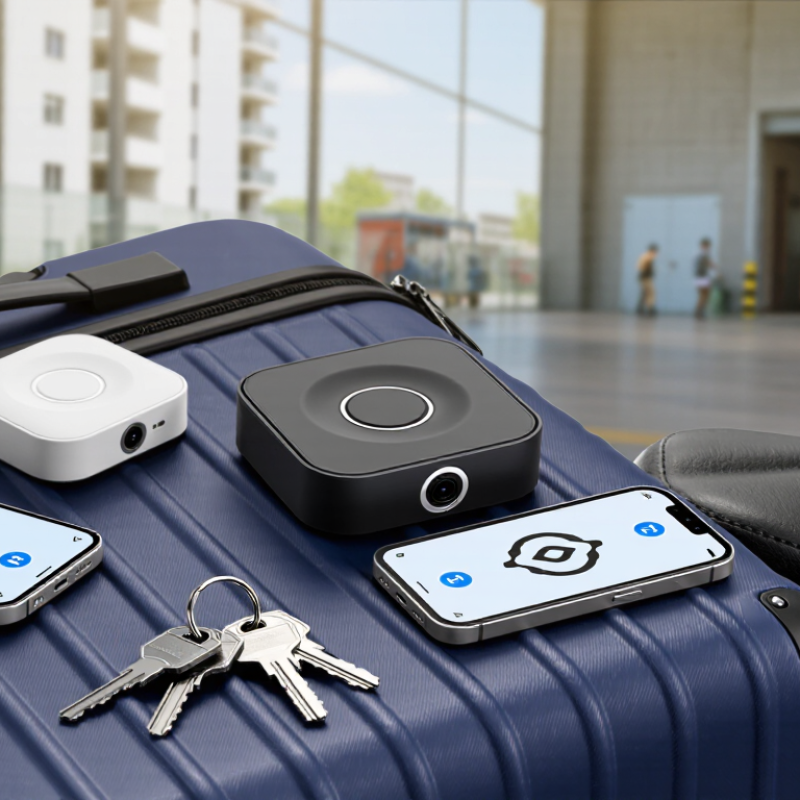
Choosing a Bluetooth Tracker for global buyers is not simply a matter of comparing prices, colors, or advertised range. The right device must perform across airports, apartments, warehouses, and crowded city streets. Network coverage matters more than a box’s impressive distance claim. A tracker may work beautifully with one phone ecosystem, yet provide limited community support elsewhere. That difference can decide whether a misplaced suitcase is recovered or remains missing.
C.J. Prober, former CEO of Tile, once described the company’s purpose clearly: “We want to help people find everything that matters.” That idea remains useful, but global purchasing requires more careful questions. Does the Bluetooth Tracker support iOS, Android, or both? Is its companion app available in the buyer’s region? Can its battery be replaced? Does it provide separation alerts, a loud sound, and reliable last-location records? Small details matter. Very much.
A practical evaluation should include network density, Bluetooth stability, battery life, water resistance, privacy controls, and after-sales support. Buyers should also check regional connectivity policies and data-handling information before purchase. Do not trust one laboratory test. Place the tracker inside a suitcase, under a bicycle seat, or beside metal equipment. Then test it in a quiet room and a busy station. Results can differ. That is the uncomfortable part. No Bluetooth Tracker performs perfectly everywhere. Even a well-reviewed model may disappoint when nearby phones are scarce, permissions are disabled, or the battery weakens. Global buyers need evidence, not optimism, before choosing a device for daily protection.
Use Bluetooth SIG’s 5.4B 2028 Forecast to Frame Buyer Needs
How to Choose a Bluetooth Tracker for Global Buyers?
Bluetooth SIG’s 2024 Market Update forecasts 5.4 billion annual Bluetooth device shipments by 2028. That figure signals scale, not guaranteed tracker quality. Global buyers should examine actual use conditions before comparing specifications. A tracker in a crowded airport faces different demands than one used on a rural farm.
Range matters, but walls, metal, and crowded radio environments reduce performance. Battery life should cover several months, with clear replacement or charging instructions.
According to IoT Analytics’ State of IoT report, connected IoT devices may reach 18.8 billion units in 2024. This wider growth suggests stronger demand for reliable, low-power accessories.
It also creates more compatibility problems. Check operating-system support, regional app access, notification behavior, and language options.
Privacy deserves equal attention. Buyers should review data collection, account controls, and lost-device alerts before purchase. Independent testing is valuable, especially for sound volume, water resistance, and real-world range.
Forecasts are not purchase instructions. A 2028 shipment estimate cannot predict every hallway or border crossing. I would also question unusually long battery claims without test conditions. Small details matter. A clear manual may prevent more frustration than another advertised meter of range.
Assess Google’s 1B+ Android-Device Network Across Target Countries
Choosing a Bluetooth tracker for global use requires more than checking range or battery life. The key question is network density. A claimed network of more than one billion compatible Android devices can improve finding coverage across many countries. Yet this figure is global, not local. A busy airport may offer strong detection, while a quiet rural road may offer almost none.
Assess each target country separately. Compare smartphone adoption, urban density, travel patterns, and local connectivity conditions. Test a tracker in shopping districts, train stations, hotels, and residential streets.
Place one inside a suitcase and monitor detection times at different hours. A signal found within ten minutes is more useful than an impressive theoretical range.
Coverage is only one part of reliability. Check whether location updates are encrypted, whether users control data sharing, and whether the device follows applicable privacy requirements. Review battery replacement options, alert accuracy, app language support, and customer service response times. These details matter during a delayed flight or a crowded transfer.
The network is not magic. It depends on nearby participating devices, software settings, and network access. That weakness deserves attention. A product may perform well in major cities but disappoint in remote regions. Buyers should record real test results, compare several countries, and treat “1B+ devices” as a starting point rather than a guarantee.
Prioritize UWB Precision and Smartphone Compatibility Before Buying
For global buyers, UWB precision deserves serious attention before price or appearance. Ultra-wideband can locate a compatible tracker within a few centimeters, especially indoors. A phone may guide you toward a suitcase under a hotel bed or behind a cabinet. This is more useful than a basic Bluetooth signal, which often shows only general proximity. Still, UWB is not magic. Walls, metal surfaces, low battery, and crowded wireless environments can reduce accuracy.
Smartphone compatibility is equally important. Check whether your phone supports UWB hardware, the required operating system, and the tracker’s locating features. Some phones can receive nearby alerts but cannot provide directional guidance. Others may support UWB only in selected regions or software versions. Read the technical requirements carefully. A familiar phone is not automatically a compatible phone.
Test the full setup before traveling. Pair the tracker at home, place it inside a suitcase, and walk through two rooms. Confirm that the map updates, the directional arrow responds, and separation alerts arrive promptly. In practical testing, notification delays can appear after battery-saving settings are enabled. That detail is easy to miss. I once assumed Bluetooth range alone would be enough, but a thick apartment wall weakened the signal noticeably. For international use, choose a tracker that works with your daily phone, has clear support documentation, and offers dependable Bluetooth coverage when UWB is unavailable. Fancy precision means little when your phone cannot use it.
Verify Privacy, CE/FCC Rules, and Replaceable-Battery Requirements
How to Choose a Bluetooth Tracker for Global Buyers?
Privacy should be checked before range, sound volume, or app design. A tracker may collect location data, device identifiers, and movement history. Read the privacy policy carefully. Look for clear retention periods, deletion options, and consent controls. The app should explain who can access shared locations. Strong encryption helps, but it does not solve every privacy concern. Test whether tracking continues after permissions are removed. This small check can reveal unexpected data behavior.
Regulatory marks also need careful interpretation. CE marking supports access to many European markets, while FCC authorization relates to radio-frequency compliance in the United States. Neither mark automatically proves global approval. Verify the exact model, wireless frequency, and seller documentation for each target country. Packaging should show required information in the correct language. Online listings often oversimplify these details. That is where buyers can make costly assumptions.
Battery design matters during daily use and long-distance distribution. A replaceable coin-cell battery can reduce electronic waste and extend product life. However, buyers should check local rules for battery safety, labeling, child protection, and disposal. The battery compartment should close firmly and resist casual opening. Spare batteries also need suitable packaging and handling. I once viewed easy replacement as an advantage without checking the compartment design. That was incomplete thinking. A practical evaluation includes opening the cover, checking the seal, and confirming whether replacement instructions are understandable. Keep evidence, not promises.
How to Choose a Bluetooth Tracker for Global Buyers?
Verify privacy, CE/FCC rules, and replaceable-battery requirements before selecting a tracker for international sales.
The chart summarizes the main checkpoints buyers should verify. CE/RED requirements generally apply when radio equipment is placed on the EU market, while FCC Part 15 authorization is relevant for intentional radio transmitters sold in the United States. GDPR or local privacy laws may apply when personal data is processed. UN 38.3 documentation is relevant to lithium-battery air transport. The EU requirement for removable and replaceable portable batteries is scheduled to apply from 18 February 2027, subject to stated legal exceptions.
Scale: 1 = checkpoint normally requiring verification; 0 = no generally applicable universal rule in this comparison. Actual obligations depend on product design, destination, data processing, sales model, and shipping method. Sources: EU GDPR, EU Radio Equipment Directive 2014/53/EU, FCC Part 15, UN 38.3, EU Battery Regulation 2023/1542.
