Top Rechargeable AA Batteries for Global Buyers?
Choosing the right rechargeable aa batteries involves more than comparing the largest capacity printed on a package. Global buyers also need to consider charger compatibility, local availability, and the devices they use every day.
Small details matter. Most AA rechargeable batteries use nickel-metal hydride chemistry and have a nominal voltage of 1.2 volts, lower than the 1.5 volts of standard alkaline cells. Many devices work well with them, but some products may show a low-battery warning sooner. Check the device manual before buying, especially for cameras, toys, and equipment that needs steady power.
Capacity is useful, but it is not the whole story. A high milliamp-hour rating may suit a game controller used for hours, while a low-self-discharge model may be more practical for an emergency flashlight stored in a drawer. Check the packaging for cycle-life claims, charging instructions, and any stated storage guidance. These details can help buyers compare products fairly, though performance still depends on the charger, temperature, and frequency of use.
There is no perfect pick. Not even close.
This guide compares rechargeable AA options through practical criteria rather than headline numbers alone. It considers everyday runtime, recharge convenience, durability claims, and how easy each product may be to find across different markets. Availability and prices change by region, so a recommendation that works in one country may not be the best value elsewhere. That is worth remembering. Your device, habits, and local charger options should shape the final choice.
What Rechargeable AA Batteries Are and How They Work
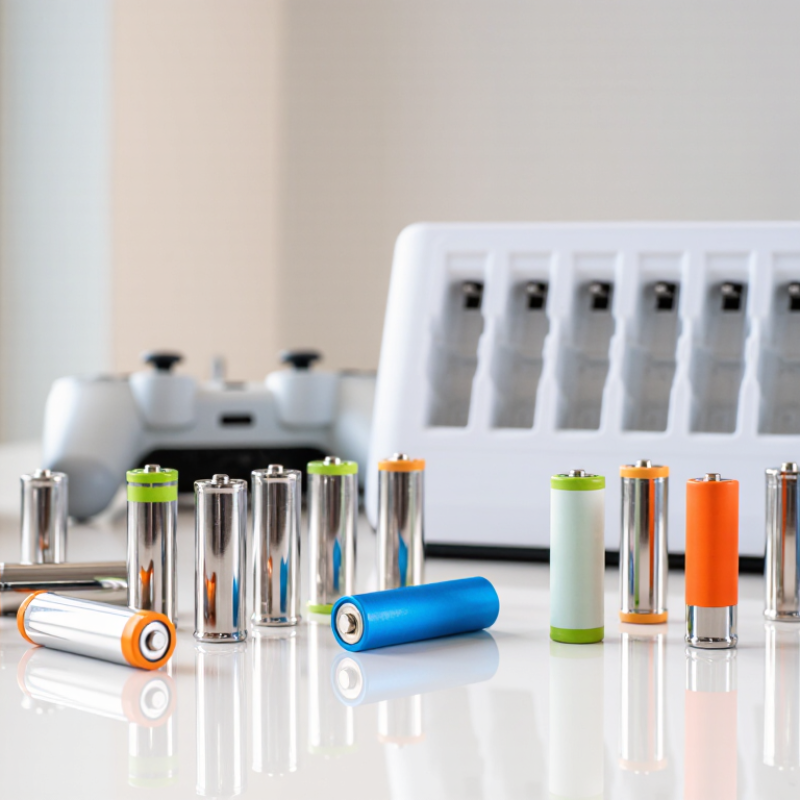
Rechargeable AA batteries store energy through a reversible chemical reaction. Many household types use nickel-metal hydride (NiMH), with electrodes and an alkaline electrolyte inside a sealed cell. During use, the reaction sends electrons through a device’s circuit. A compatible charger reverses that process by supplying controlled electrical current. The battery then stores energy for another use. Not endlessly, though: capacity gradually declines with repeated charging, age, and heat.
A typical NiMH AA cell has a nominal voltage of 1.2 volts, compared with about 1.5 volts for a standard alkaline cell. Many devices work well with this difference, but some low-battery indicators may respond sooner than expected. The trade-off is easy to miss: voltage alone does not describe how long a battery will run. Capacity, device power needs, temperature, and battery condition all matter. Chemistry can be a little less simple than the label suggests.
Tips: Use a charger designed for the battery’s chemistry and size. Avoid mixing old and new cells in one device. Keep batteries cool and dry, and check for damage before charging. Small habits help. But they are easy to forget.
Top Rechargeable AA Batteries for Global Buyers? — What They Are and How They Work
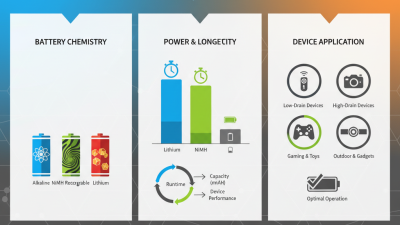
AA describes a battery size, not its chemistry. Nickel-metal hydride (NiMH) is a common rechargeable AA chemistry.
How it works: During discharge, a rechargeable NiMH battery converts stored chemical energy into electrical energy. A compatible charger reverses the reaction so the battery can be used again. Typical nominal voltage is 1.2 V for NiMH AA and 1.5 V for alkaline AA; alkaline is shown as a non-rechargeable reference. Actual voltage changes during use.
Common AA Battery Chemistries and Their Trade-Offs
Common AA Battery Chemistries and Their Trade-Offs
Nickel-metal hydride (NiMH) batteries are a practical choice for cameras, toys, and wireless accessories. Their nominal voltage is 1.2 volts, lower than the 1.5 volts of disposable alkaline cells. Most devices handle this difference well, but a few may show a low-battery warning early. Low-self-discharge NiMH cells can retain useful charge in a drawer for months. Cold weather and repeated high-drain use can still reduce runtime. Small differences matter.
Nickel-zinc (NiZn) cells provide about 1.6 volts per cell, which can suit equipment that needs a stronger initial voltage. That higher voltage is not ideal for every device, so check the device specifications before switching. NiZn batteries also require a compatible charger; a standard NiMH charger is not a safe assumption. Their capacity and cycle life may vary considerably by product, making comparisons worth a closer look.
Rechargeable lithium-ion AA-format cells commonly regulate their output to around 1.5 volts using internal electronics. This can deliver steady voltage, but the printed capacity may not compare directly with NiMH ratings. Charging methods vary, too, so follow the cell maker’s instructions. In practice, chemistry is only part of the decision: device compatibility, storage time, charger type, and replacement cost all matter. I would not choose from voltage alone.
Capacity, Voltage, Cycle Life, and Self-Discharge Explained
AA battery labels can make capacity look like the only measure that matters. It is not. Capacity, usually listed in milliamp-hours, estimates how much charge a cell can deliver under specified test conditions. A higher figure may help a camera flash through a long day, but actual runtime also depends on the device’s current draw and cutoff voltage. Numbers are useful, not magic.
Most rechargeable AA cells use nickel-metal hydride chemistry, with a nominal voltage of about 1.2 volts; standard alkaline cells are typically rated at 1.5 volts. Many devices work well with rechargeable cells, but some low-battery indicators may react sooner. Check the device manual, especially for equipment that needs a steady voltage. A quick test in the actual device is often more informative than comparing labels alone.
Cycle life describes how many charge-and-discharge cycles a cell may withstand before its capacity falls noticeably. The result depends on charging temperature, discharge depth, and charger quality, so advertised figures are not directly comparable. Self-discharge matters too: ordinary cells may lose charge during storage, while low-self-discharge designs generally retain more. Keep a charged pair in a cool, dry drawer and check it before travel. Even then, storage claims can feel optimistic; measure performance over time if dependable runtime matters.
How to Assess Safety, Charger Compatibility, and Performance
Top Rechargeable AA Batteries for Global Buyers?
Safety starts with chemistry and condition. Many rechargeable AA cells use nickel-metal hydride chemistry, but check the label rather than relying on appearance. Use a charger designed for that chemistry and cell size. A mismatch can cause overheating or poor charging. Stop using cells with leaks, dents, or damaged wrapping. Charge them on a dry, stable surface, away from fabrics. Small details matter.
Charger compatibility deserves a close look. Some chargers monitor each cell separately; others treat cells in pairs. Individual monitoring can help when cells reach full charge at different times. Check polarity and follow the charger’s instructions. Don’t assume a charger is suitable just because the cells fit. I still find that easy to overlook.
For performance, compare capacity, self-discharge, and expected device use. A higher capacity figure may mean longer runtime, but it does not tell the whole story. A camera flash and a wall clock place different demands on cells. Rechargeable AA cells often provide 1.2 volts, so some battery indicators may read lower than expected. Test a matched set in the actual device, then track runtime over several cycles. Results vary. Temperature, storage, and age all matter, and neat figures on packaging cannot capture every household’s experience.
Global Buying Factors: Standards, Availability, and Shipping
Top Rechargeable AA Batteries for Global Buyers?
For international orders, compare more than capacity. Most rechargeable AA cells use nickel-metal hydride chemistry and deliver about 1.2 volts. Check that devices and chargers support this voltage. Capacity ratings, measured in milliamp-hours, help estimate runtime, but real results vary with device use and temperature. Ask suppliers for current test reports and clear product specifications. Standards and documentation may differ by destination.
Tips: Request samples before a large order. Check labels, packaging, and charger compatibility. Small details matter.
Availability can shift with season, production schedules, and order size. Confirm stock, minimum quantities, lead times, and replacement options in writing. Before shipping, verify the battery chemistry and ask the carrier or supplier which documents and packing rules apply to your route. Requirements can differ. A low unit price may look attractive, yet slow delivery or unclear paperwork can disrupt a launch. I would leave extra time for the first shipment; estimates are not guarantees.