
Why Choose a Mini Mallet Putter Cover?
A mini mallet putter may be compact, but its head still needs protection in a crowded golf bag. Clubs shift during a walk or ride, and exposed putter faces can rub against irons, zippers, and other hard surfaces. A Mini Mallet Putter Cover helps limit that contact while keeping the putter easy to identify and reach. It is a small accessory. Its job is practical.
The right cover should match the putter’s shape, not just its label. Mini mallet designs vary, so check the head dimensions and opening before buying. A snug fit can stay in place, while an overly tight one may be frustrating to remove between shots. Look for a soft interior, durable stitching, and a closure that feels secure without requiring a struggle. Magnetic closures are convenient for some golfers; others prefer a zipper or an elastic fit. There is no perfect option for everyone.
Weather matters, too. Some covers resist light moisture, but that does not make every cover waterproof. Letting a damp cover dry after a round is a sensible habit. Color and appearance may influence the choice, yet protection and fit deserve more attention. It is easy to focus on looks. That can be a mistake. A well-chosen Mini Mallet Putter Cover can help preserve a valued club’s finish and make bag storage less chaotic, though it cannot prevent every scratch or impact. Even careful golfers have off days.
What Defines a Mini Mallet Putter Cover?
Why Choose a Mini Mallet Putter Cover?
What Defines a Mini Mallet Putter Cover?
A mini mallet putter cover is shaped for a compact, rounded or winged putter head. It usually offers more coverage than a blade cover, while taking up less space than many full-size mallet covers. “Mini mallet” is a retail shape description, not a universal size standard. The USGA Equipment Rules address club design, but do not prescribe cover dimensions for this label. Fit matters. Measure the head’s width, depth, and height, and check the hosel position before buying. Small differences can leave a cover loose or difficult to close.
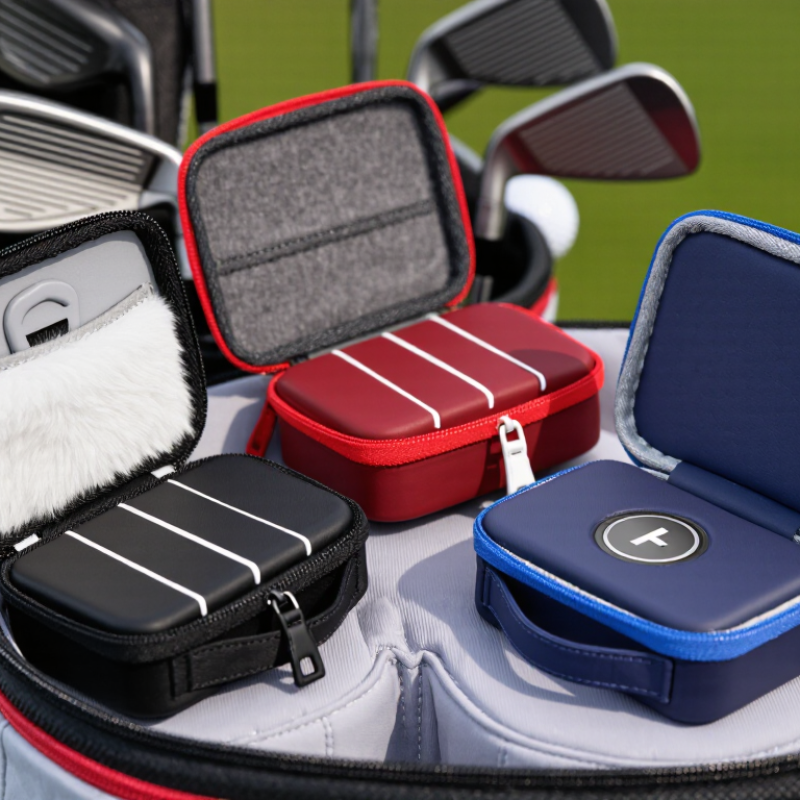
Construction affects daily use. A soft lining helps protect the finish from grit, while a padded outer shell can soften bumps inside a golf bag. Magnetic closures are quick to handle; elastic or hook-and-loop closures may suit different shapes. None guarantees a perfect fit. The National Golf Foundation reported 28.1 million U.S. on-course golfers in 2024, in its 2025 participation report, reflecting a large audience carrying equipment between rounds. A cover should stay secure when clubs shift, yet come off without a tug-of-war. I would not trust the size label alone; manufacturers describe “mini” differently, and I have seen measurements matter more than the name.
| Feature | What It Means | Why It Matters |
|---|---|---|
| Compact head shape | Made for putters with a smaller, compact mallet-style head rather than a traditional blade or a larger, wide-bodied mallet. | A cover shaped for the head can provide a closer fit and reduce excess material around the putter. |
| No universal size standard | “Mini mallet” is a general fit description, not a standardized set of head dimensions. Putter shapes and cover openings vary. | Check the cover’s fit guidance and compare it with your putter’s head shape before buying. |
| Protective coverage | A well-fitted cover helps shield the putter head from scratches, dings, and contact with other clubs during transport. | Useful for keeping the putter in better condition in a golf bag or while traveling. |
| Soft interior lining | Many covers use a soft inner lining, such as fleece or another padded fabric, to cushion the clubhead. | Soft lining helps limit abrasion, especially when the head moves against the cover during handling. |
| Secure closure | Common closures include magnets, hook-and-loop fasteners, and elasticized openings. | A secure closure helps keep the cover on the head; ease of removal depends on the design and fit. |
| Compact storage | A smaller cover generally takes up less room than one made for a larger mallet head. | Can be convenient in a crowded golf bag, though the actual space saved depends on the cover’s construction. |
| Potential trade-off | A compact cover may not fit a larger mallet, an unusually shaped head, or a putter with prominent attachments. | Do not rely on the “mini mallet” label alone; confirm the shape and fit requirements. |
| Best choice for | Golfers whose putter has a compact mallet-style head and who want a cover designed around that smaller profile. | Choose based on head shape, secure retention, protective lining, and convenient removal—not appearance alone. |