
2026 Best EV Charging Points for Global Buyers?
Choosing the right Ev Charging Points in 2026 requires more than comparing charging speed and advertising claims. Global buyers face different vehicle connectors, grid standards, payment systems, and installation rules. A charger that works smoothly in London may need an adapter, software change, or electrical upgrade in Singapore or Toronto. This guide examines those practical differences before discussing performance.
Reliable research should begin with verified specifications, safety certifications, warranty terms, and support availability. Look for clear information about power output, cable length, weather protection, load balancing, and smart charging features. A 22 kW unit sounds impressive, but many homes cannot deliver that power without costly electrical work. A slower charger may be the wiser choice for overnight charging.
Real-world experience also matters. Outdoor users should consider rain, dust, freezing temperatures, and limited Wi-Fi coverage. Apartment owners may need permission, shared-meter planning, or a professional installation assessment. Some apps are polished but unreliable in certain regions. That detail is easy to overlook.
This overview compares leading Ev Charging Points for different budgets, vehicles, climates, and charging habits. It also considers installation complexity, long-term maintenance, data privacy, and customer service. No single model suits every buyer. Even respected products have weaknesses, and product information can change after publication. Readers should confirm local compatibility and current certifications before purchasing. The goal is not to promote the fastest charger blindly, but to identify dependable equipment that fits real homes, roads, and routines.
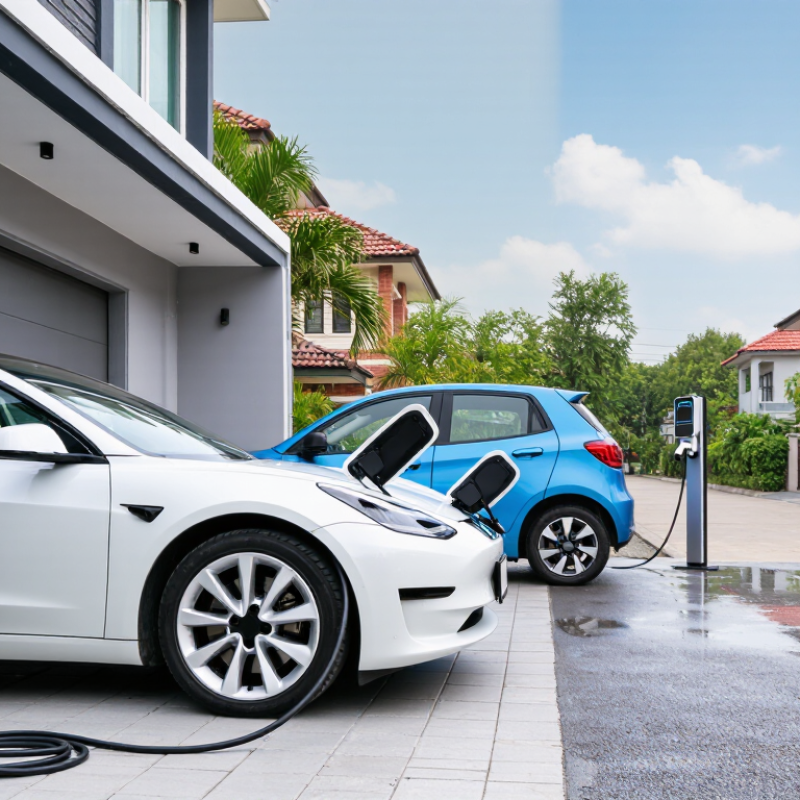
What EV Charging Points Are and How They Work
What EV Charging Points Are and How They Work
An EV charging point is the equipment that safely connects an electric vehicle to the power supply. It is not a battery. The unit controls electricity, checks the connection, and communicates with the vehicle before charging begins. A cable, connector, display, and protective circuit usually form the visible parts. Small details matter.
With AC charging, electricity travels from the grid to the vehicle’s onboard charger. That charger changes alternating current into battery-ready direct current. AC units commonly support overnight charging at homes, offices, or hotels. DC charging points perform the conversion inside the station, then send direct current to the battery. This can reduce charging time, but speed depends on battery temperature, state of charge, and vehicle limits. “Fast” does not always mean fast.
A reliable charging point monitors voltage, current, temperature, and grounding. If it detects abnormal conditions, it should stop the flow. Many systems also balance power across several vehicles, preventing a building from exceeding its electrical capacity. For global buyers, local voltage, connector standards, weather protection, certification, and installation rules deserve careful checking. A unit designed for one region may need different wiring or communication settings elsewhere. Practical testing should include cold mornings, wet connectors, weak internet signals, and shared parking use. Real installations are rarely perfect. The screen may respond slowly, or cable storage may feel awkward. Those flaws are worth noticing before purchase.
| Charging Point Type | How It Works | Typical Supply | Typical Output | Approximate Driving Range Added per Hour | Typical 10–80% Charging Time | Best Use | Important Buying Considerations |
|---|---|---|---|---|---|---|---|
| AC Portable Charging Point | Delivers alternating current to the vehicle. The vehicle’s onboard charger converts AC into DC for the battery. | Single-phase household supply, approximately 100–250 V | About 1.4–3.7 kW | Approximately 8–25 km | About 12–36 hours, depending on battery size | Emergency charging, travel, and locations without fixed equipment | Check socket condition, grounding, weather protection, cable temperature, and local electrical regulations. |
| AC Home Charging Point | Supplies controlled AC power to the vehicle’s onboard charger. Charging is managed through current protection and communication between the vehicle and the charger. | Single-phase, approximately 220–240 V; some markets also use 110–120 V | About 3.7–7.4 kW | Approximately 20–50 km | About 6–15 hours | Overnight home charging for most passenger EVs | Confirm household service capacity, residual-current protection, cable length, outdoor rating, and installation approval. |
| Three-Phase AC Charging Point | Uses three-phase AC to provide more power while the vehicle’s onboard charger continues converting AC into battery-ready DC. | Three-phase supply, commonly around form 380–415 V line-to-line | About 11–22 kW | Approximately 60–140 km | About 2–6 hours | Homes with suitable electrical service, workplaces, apartments, and destination charging | The vehicle must support three-phase charging; verify phase balance, load management, protection devices, and local grid limits. |
| Low-Power DC Charging Point | Converts AC to DC inside the charging equipment and sends regulated DC directly to the battery, bypassing most of the onboard charger. | Three-phase AC input; DC output commonly below 60 kW | About 20–60 kW | Approximately 100–300 km | About 30–90 minutes | Retail locations, fleets, parking facilities, and shorter public stops | Compare output power, connector compatibility, payment functions, operating temperature range, and maintenance support. |
| Standard DC Fast Charging Point | Direct current is controlled by the charging point and the vehicle’s battery-management system. The system adjusts voltage and current throughout the session. | High-capacity AC input; DC output commonly 400–500 V | About 50–150 kW | Approximately 250–750 km | About 20–60 minutes | Highways, urban public charging, and commercial fleets | Check the vehicle’s maximum DC acceptance rate, cable cooling, uptime, access method, and regional connector standard. |
| High-Power DC Charging Point | Provides high-voltage DC directly to the battery. Charging power normally decreases as the battery approaches a high state of charge to protect battery life and manage heat. | Typically 400–1,000 V DC output architecture | About 150–350 kW | Approximately 600–1,800 km | About 15–35 minutes for compatible vehicles | Intercity travel, highway corridors, taxis, and time-sensitive fleets | High power is useful only when the vehicle supports it; assess grid capacity, thermal management, cable weight, and demand charges. |
| Fleet or Depot Charging Point | Charges multiple vehicles through scheduled AC or DC sessions. Software can distribute available power according to departure time, battery state, and fleet priority. | Single-phase or three-phase supply, depending on site capacity | About 7–180 kW per charging outlet | Approximately 40–900 km per hour | About 1–12 hours, depending on vehicle type and power allocation | Delivery vehicles, buses, rental fleets, logistics centers, and company parking | Plan transformer capacity, simultaneous charging, cable management, access control, energy monitoring, and future vehicle growth. |
| Solar-Integrated Charging Point | Uses solar electricity when available and may combine it with the utility grid or stationary storage to reduce peak-grid demand. | AC or DC system connected to solar generation and, optionally, battery storage | About 3.7–22 kW AC or up to 150 kW DC | Approximately 20–750 km per hour | Depends strongly on sunlight, storage capacity, and vehicle power acceptance | Homes, workplaces, commercial sites, and locations seeking lower operational emissions | Evaluate solar output, shading, battery storage, grid connection, weather resistance, and local renewable-energy rules. |
Note: Charging speed varies with battery capacity, vehicle acceptance limits, battery temperature, state of charge, cable rating, supply voltage, and local electrical standards. Range figures are approximate and assume an electric vehicle using about 15–20 kWh per 100 km. Actual 10–80% times may be longer in cold or hot conditions and near full charge.